Did you enjoy this article?
Subscribe for spiritual insights and new articles.
Within the rich and complex tapestry of the 21 Divisions of Dominican Vodou, few spiritual families command as much respect and profound fascination as the Ghede. They are the enigmatic guardians of the cemetery, the irreverent tricksters, and the bearers of the ultimate wisdom, the wisdom of what lies beyond the veil. Among them, figures like Papa Ghede and Papa Guede stand as primary sentinels, protecting the fragile boundary between the world of the living and the realm of the ancestors.
Some teachings and reflections on this tradition are also available in Spanish. You can explore the Spanish section here: Temas Espirituales.
To the uninitiated, these spirits might seem macabre, but within the tradition, they are revered with deep reverence and even a certain celebratory joy. They are not spirits of death in the sense of endings, but rather spirits of transition. They represent profound transformation, protection, and the unique clarity that comes from understanding both the beginning and the inevitable end of all things. They use humor and shocking honesty to deliver messages that can cut through confusion and reveal deep truths.
Alongside these powerful cemetery spirits, another figure is often honored in households seeking urgent intervention: Saint Expedite, also known as San Expedito in Spanish and Caribbean traditions. His energy is distinctly different, linked to urgency, justice, and rapid spiritual assistance when someone faces a seemingly impossible situation. Together, these spirits form a powerful triad of protection, wisdom, and swift action.
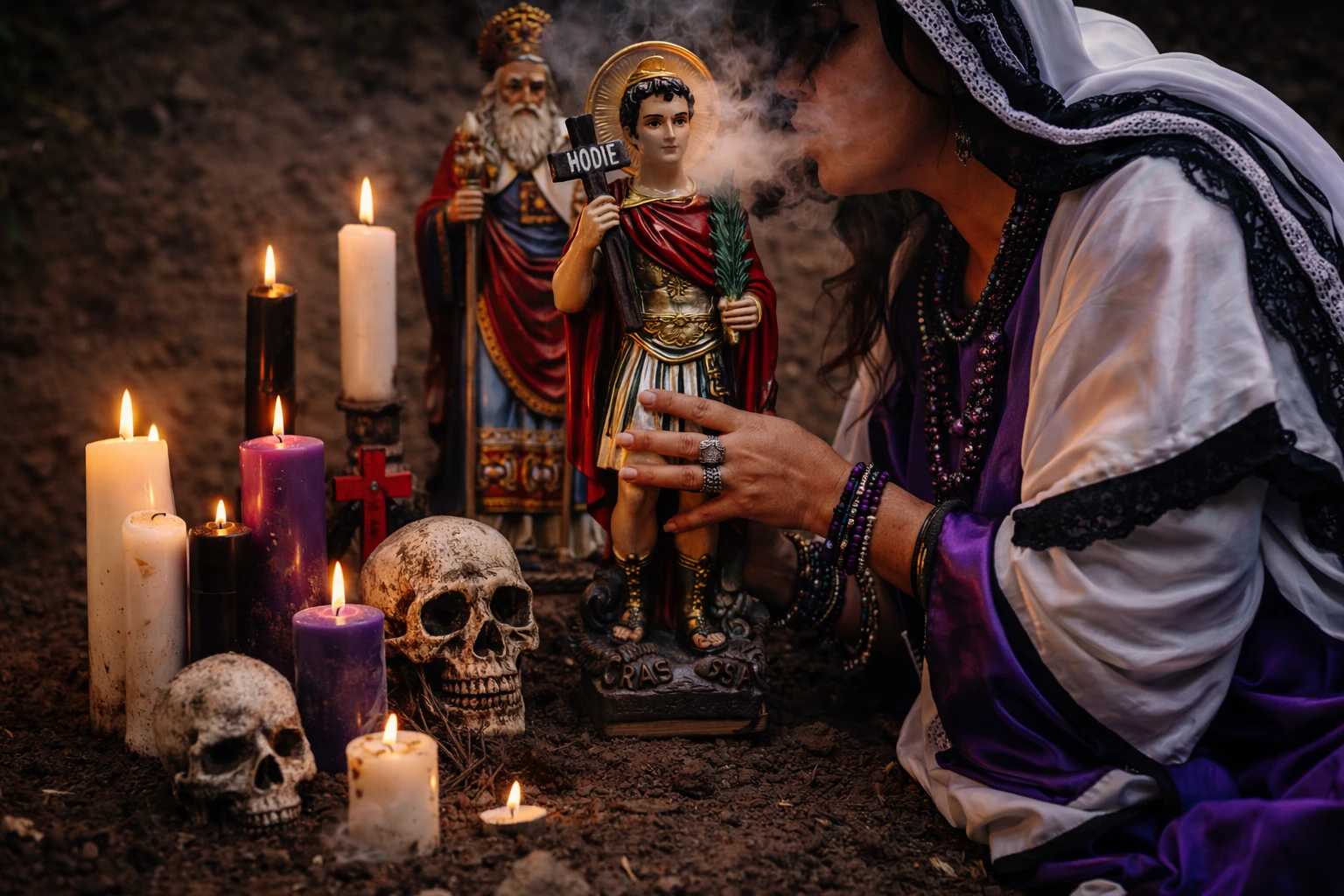
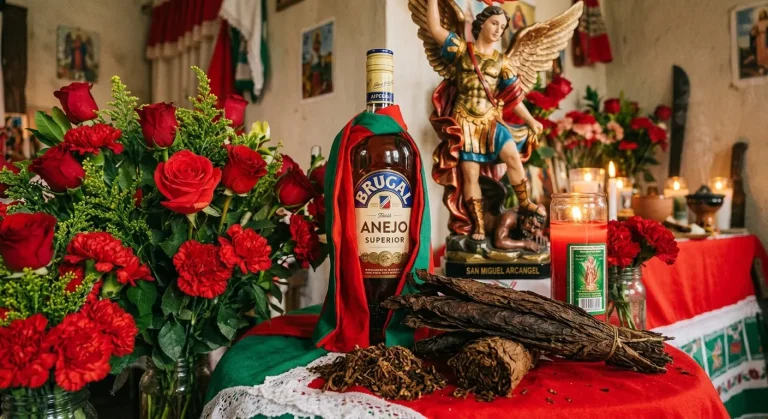
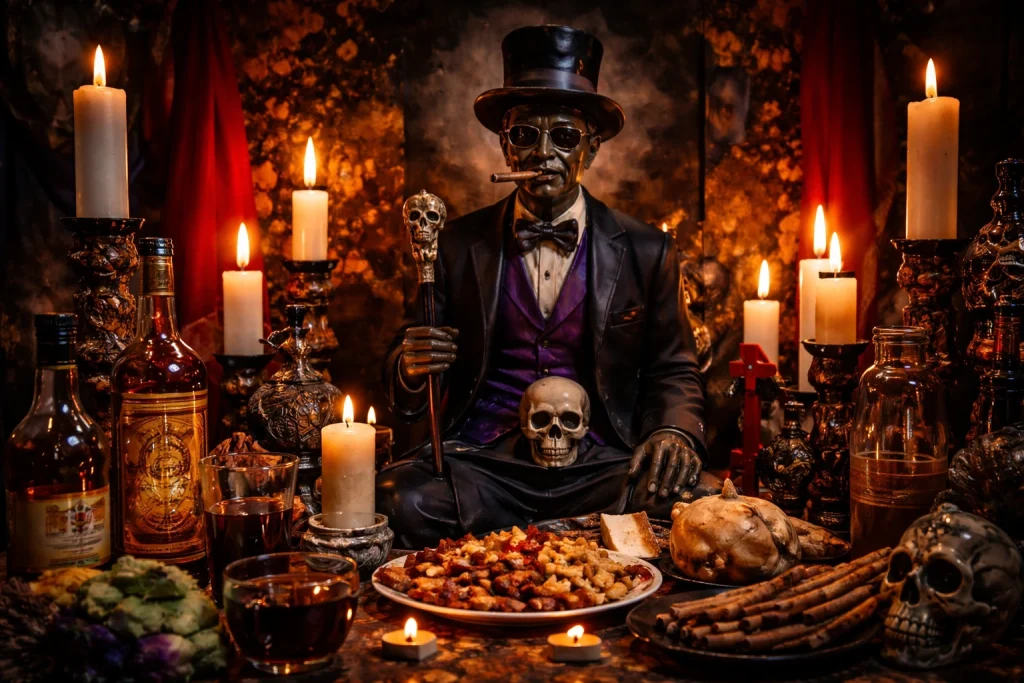
Altars dedicated to Papa Ghede often include black and purple candles, rum, cigars, and symbolic offerings connected to the cemetery.
The Role of Papa Ghede in the 21 Divisions
Papa Ghede is widely recognized as the chief, or one of the principal chiefs, of the Ghede spirits. He is the undisputed master of the cemetery, the guardian of the ancestral realm, and the embodiment of the mystery of death that paradoxically leads to renewal and rebirth. His domain is the crossroad, both physically at the cemetery gates and metaphysically in life's critical moments of decision.
Within the 21 Divisions tradition, the Ghede are not feared in the conventional sense. They are guardians and teachers. They remind people that life has a cycle, a sacred circle, and that every ending, no matter how painful, also contains the seed of a new beginning. This philosophy provides immense comfort and strength to those facing loss or major life changes.
Practitioners often describe Papa Ghede's personality as direct, witty, and unfiltered. He speaks with absolute clarity, often using humor and provocation to make his point. His guidance can feel strong, even jarring, yet it always carries a profound purpose. Many people seek his protection when facing spiritual attacks, oppressive negativity, or heavy emotional burdens that feel like a kind of living death. He is the ultimate protector against spiritual stagnation.
Papa Guede and the Energy of Transformation
The name Papa Guede is often mentioned in the same breath as Papa Ghede, and understanding their relationship adds depth to the tradition. Some spiritual houses and lineages see them as different expressions or aspects of the same fundamental spiritual current, with Papa Ghede being the more authoritative, judicial aspect, and Papa Guede representing the raw, transformative power of the cemetery. Others describe them as distinct but closely allied spirits within the greater Ghede family, much like brothers or cousins with unique roles.
The energy of Papa Guede is intensely tied to transformation. He is the spirit who presides over the decomposition of the old to make way for the new. He reminds devotees that death is not only a physical, biological event. It is a powerful metaphor for spiritual growth. It can symbolize the necessary death of old habits, toxic relationships, limiting beliefs, old pain, or entire situations that no longer serve a person's highest spiritual path.
Through this powerful lens, the cemetery is reframed. It ceases to be a place of fear and becomes a sacred space of transition. It represents the inevitable movement from one stage of life into another, a gateway rather than a final destination. Working with Papa Guede requires a willingness to let go and trust the process of renewal.
Saint Expedite and the Power of Urgent Spiritual Help
Saint Expedite, known as San Expedito in many Caribbean and Latin American traditions, occupies a unique and beloved place in popular piety and syncretic spiritual practice. He is honored as a powerful and immediate helper when someone needs fast, no-nonsense assistance. His very name evokes speed and action.
People from all walks of life often pray to him when facing imminent court dates, overwhelming financial pressure, sudden illness, or obstacles that require quick resolution. His devotion teaches discipline, the importance of clear intention, and trust in divine timing. The iconography of Saint Expedite, often depicted trampling a crow while holding a cross marked "Hodie" (Latin for "today"), reinforces his message: act now, do not delay, overcome the doubts and procrastinations symbolized by the crow.
In many spiritual communities, Saint Expedite is approached with specific offerings: a glass of water, red flowers, a lit red candle, and sincere, direct prayers asking for justice and swift solutions. He is a spirit of action, and in return for his help, he often asks for public testimony of his miracles, spreading his fame so he can continue his work.
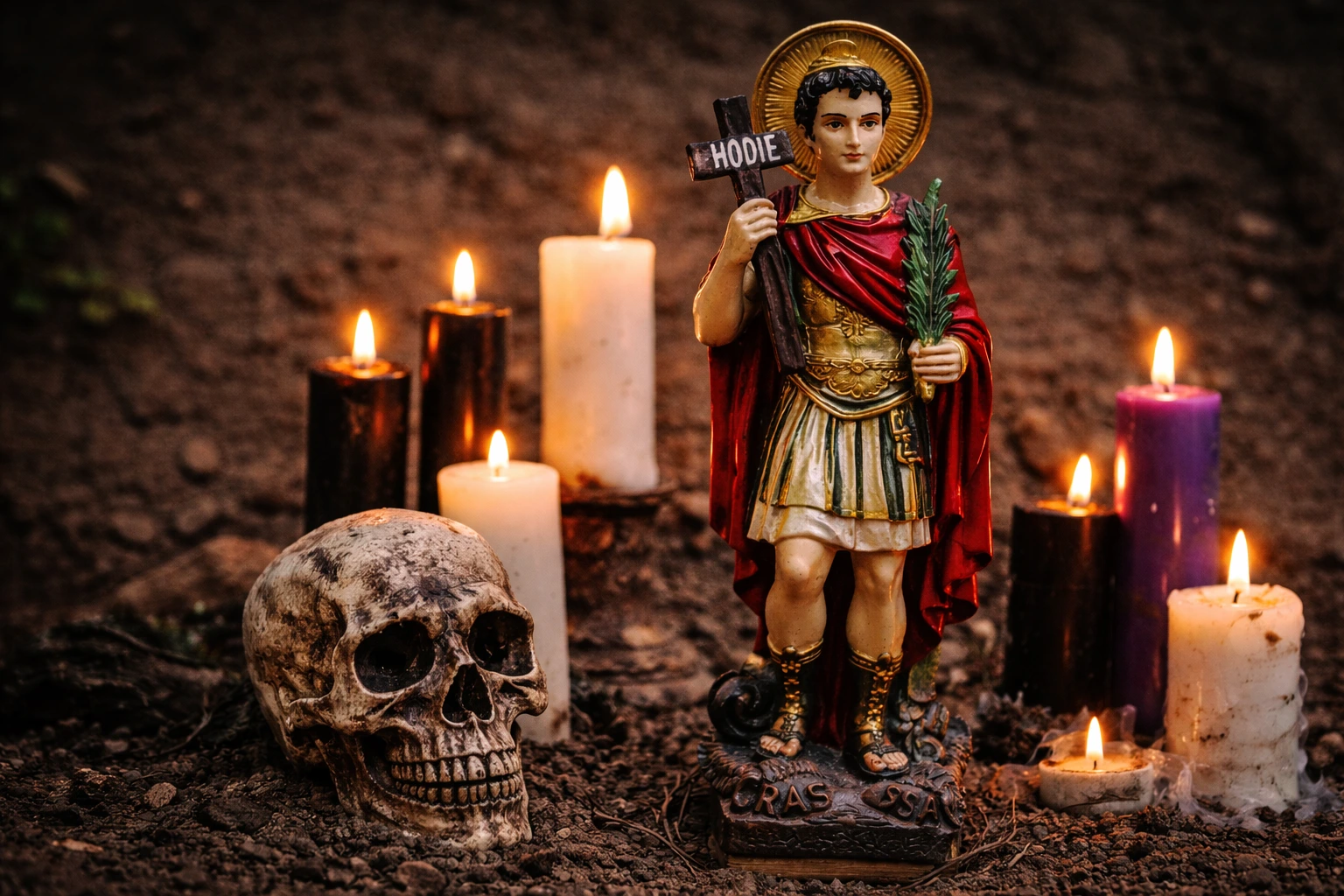
Saint Expedite is often invoked in moments when urgent spiritual assistance is needed. His red cloak symbolizes his fiery, active energy.
The Cultural and Historical Context of the 21 Divisions
To truly understand the role of spirits like the Ghede, it is essential to appreciate the cultural and historical roots of the 21 Divisions. This tradition is a vibrant and complex Afro-Dominican spiritual system that blends the beliefs of enslaved West and Central African peoples (primarily from the Fon, Yoruba, and Kongo cultures) with the influences of European Catholicism and Indigenous Taíno spirituality.
The 21 Divisions, or "Las 21 Divisiones," refers to the categorization of spirits into different branches or "divisions," which often correspond to African nations or "cabildos." The Ghede, for instance, are often associated with the rada and petro rites found in Haitian Vodou, but in the Dominican context, they have their own distinct expressions and hierarchies. This syncretic process was a means of survival, allowing enslaved people to preserve their ancestral faith under the guise of venerating Catholic saints. Understanding this history brings a deeper respect for the resilience and wisdom embedded in these practices.
Respecting the Spirits of the 21 Divisions
Working with spirits such as Papa Ghede, Papa Guede, and even the canonized Saint Expedite within this context requires profound respect, cultural sensitivity, and a commitment to understanding. These are not simple archetypes or tools to be used lightly; they are powerful, ancient forces with their own histories, preferences, and protocols. These traditions carry centuries of cultural and spiritual knowledge that must be honored.
Many sincere practitioners learn through direct, guided experience under the mentorship of experienced spiritual leaders, often called Papas, Mambos, or Houngans, who understand the nuanced customs, specific prayers, sacred songs, and appropriate rituals connected to these spirits. Attempting to work with them without proper guidance can be ineffective or, in some cases, spiritually disruptive.
The 21 Divisions tradition is vast and also honors many other spirits who guide people toward healing, prosperity, and joy. One beautiful example is Anaisa Pye, a beloved spirit known for her domain over love, celebration, financial abundance, and emotional balance.
Seeking Guidance Through Spiritual Consultation
When people feel a sincere and respectful draw toward these traditions, many questions naturally arise. How can someone learn to accurately interpret the subtle messages of the spirits? In what manner should offerings be prepared and presented? What is the true meaning behind a recurring dream, a sudden sign in nature, or a synchronistic event?
Spiritual consultation, when conducted by a reputable and experienced practitioner, can be an invaluable tool to clarify these questions and illuminate the path forward. Through respectful and ethical guidance, individuals can explore their spiritual calling with greater clarity, safety, and understanding, ensuring their steps are aligned with the traditions they seek to learn from.
If you feel a genuine and respectful call to explore this spiritual tradition more deeply, you may request guidance through a spiritual consultation to gain personalized insight.
You can also follow ongoing teachings, cultural reflections, and community updates through social media:
Understanding the Deeper Message Behind the Spirits
The Ghede spirits, in their laughter and their solemnity, remind people of a simple yet profound truth. Life and death are not opposites, but two sides of the same sacred coin. They exist side by side, constantly interacting. One cannot be fully understood or appreciated without the other. To honor death is to love life more deeply.
When someone honors Papa Ghede or Papa Guede, the intention is never to seek darkness or morbidity. The intention is to gain profound wisdom about the nature of existence, to understand the cycles of transformation, and to secure powerful protection on one's journey. They are the ultimate realists, cutting through illusion.
Saint Expedite adds another crucial lesson to this spiritual mix. Faith must move with courage and deliberate action. It is not enough to simply hope or wish. When a person asks for help from the divine, they must also be prepared to act decisively and responsibly when the opportunity for resolution appears. He is the patron saint of the deadline, teaching us that grace often arrives at the eleventh hour, but requires us to be ready to receive it.
Through genuine respect, heartfelt prayer, and a commitment to understanding the deep traditions from which they emerge, these spirits, the Ghede and Saint Expedite, continue to guide sincere seekers toward clarity, protection, and profound spiritual strength.
Frequently Asked Questions
Who is Papa Ghede in the 21 Divisions?
Papa Ghede is considered a chief spirit of the cemetery within the 21 Divisions tradition. He serves as the guardian of the ancestral realm and the gateway between life and death. He represents protection, ancestral wisdom, and the transformative power of transition.
Is Papa Guede different from Papa Ghede?
This depends on the specific lineage or spiritual house. Some traditions see Papa Guede as another expression or aspect of the same Ghede spiritual current, focusing on raw transformation. Others describe him as a distinct, closely related spirit within the same family. Both are honored for their roles in protection and navigating change.
What does Saint Expedite help with?
Saint Expedite is universally honored for providing urgent spiritual assistance. People pray to him for swift resolutions to pressing problems involving legal matters, financial crises, health scares, and difficult life decisions where time is of the essence.
Can beginners connect with these spirits?
Beginners who feel drawn to these spirits are strongly encouraged to approach them with profound respect and to seek proper guidance. Learning from experienced practitioners, engaging with reputable community resources, or seeking a spiritual consultation can help ensure the connection is made with understanding and in a way that honors the tradition.
Did you find this article helpful?